Why Keep Your Old Solid Timber Staircase? A Damansara Heights Bungalow Refurbishment
When a staircase is built from solid timber planks, the best advice is often not to replace it. Here is why, shown through a real refurbishment of a large bungalow in Damansara Heights.
Short version: if your staircase is made of solid timber planks and is structurally sound, refurbishing it (resanding, revarnishing and adding a protective lacquer) is usually better than replacing it. You keep real wood in sizes that are getting hard to find, and you avoid paying to swap it for a cheaper material.
The advice that isn't always given
Ask several contractors about an old timber staircase and many will give the same answer: tear it out and replace it. Replacement is simple to quote and simple to schedule, and the substitute is usually a cheaper material.
Summit World's team takes a different starting position. Most of the time, they ask the homeowner to keep an old full-plank staircase. The reason is simple: it is the owner's money, and in most cases replacement quietly spends it on a downgrade.
Why solid timber stairs are worth keeping
- Large solid timber is getting harder to find. In Summit World's trade experience, wide and thick solid hardwood planks are scarcer and more expensive than they used to be. Big sections come from mature trees that take decades to grow, so an existing full-plank staircase is hard to replicate.
- Replacing usually means a downgrade. The realistic substitutes are thinner, veneered or engineered products. You pay for demolition and new material, and end up with less real wood than you started with.
- Solid timber can be refinished. Because the whole plank is real wood, it can be sanded back to clean timber and refinished, often more than once. A thin veneer or overlay cannot take that.
- Refurbishing refreshes the look. New colour, new finish and a protective topcoat can make an old staircase look new without losing its character.
The project: a large bungalow in Damansara Heights
This staircase belongs to a very large bungalow in Damansara Heights, one of Kuala Lumpur's established prime residential areas. The owner had a staircase built from solid timber planks, with a wide-tread open design and a matching double-rail balustrade. Rather than replacing it, the owner chose to keep the wood and have it refurbished. The project is shown here with the owner's approval; their name and address are withheld.
What the Summit World team did
- Took out the timber. The staircase timber was carefully removed rather than demolished, so the original solid planks could be kept and reused.
- Resanded the wood. The old finish was sanded back to clean timber, removing wear, scratches and the tired colour of the old coating.
- Revarnished it. A fresh varnish restored the depth of colour and the natural beauty of the grain.
- Added a protective lacquer. A lacquer topcoat was applied to protect the surface from daily wear on a high-traffic staircase.
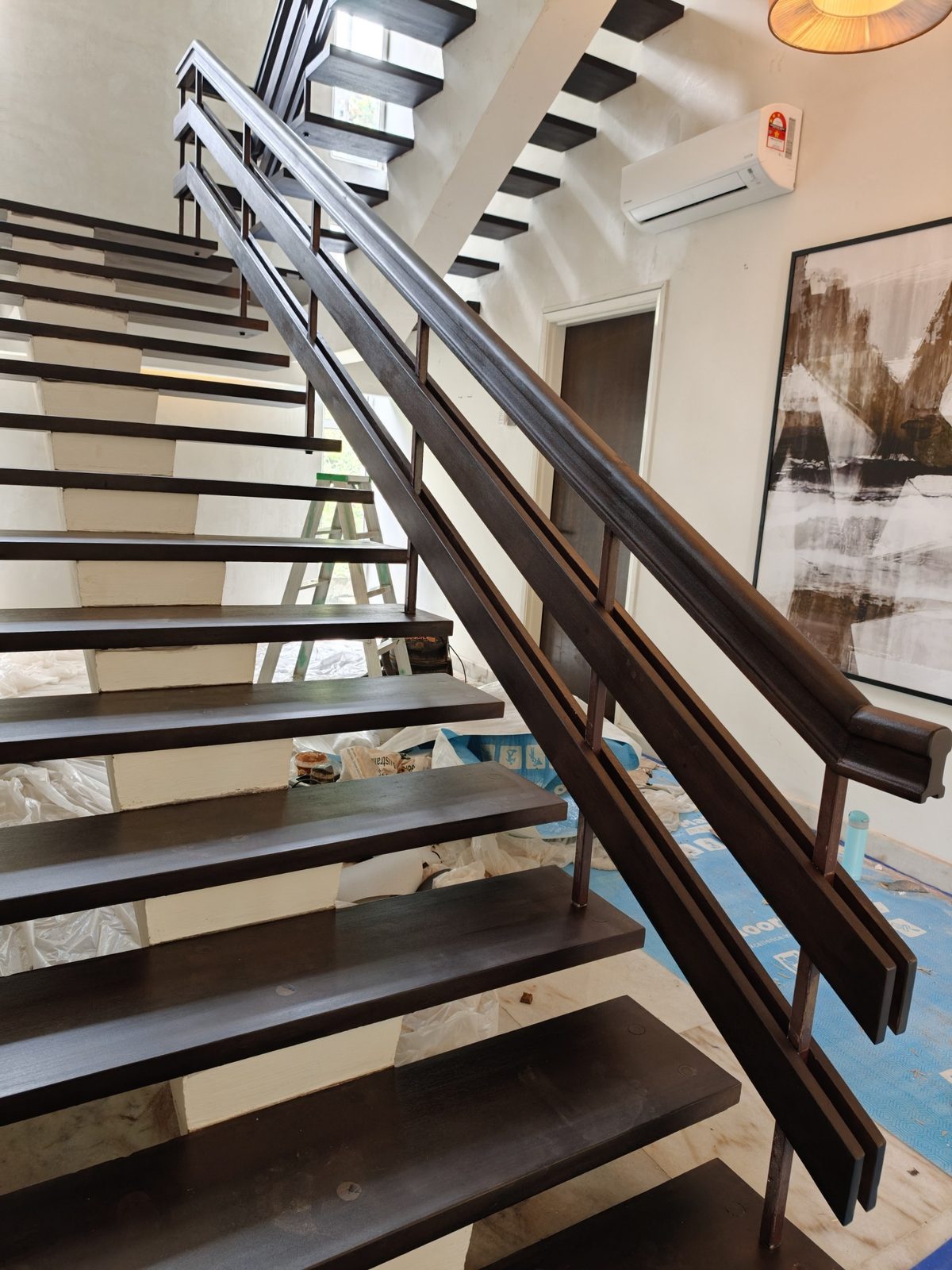
The result, up close
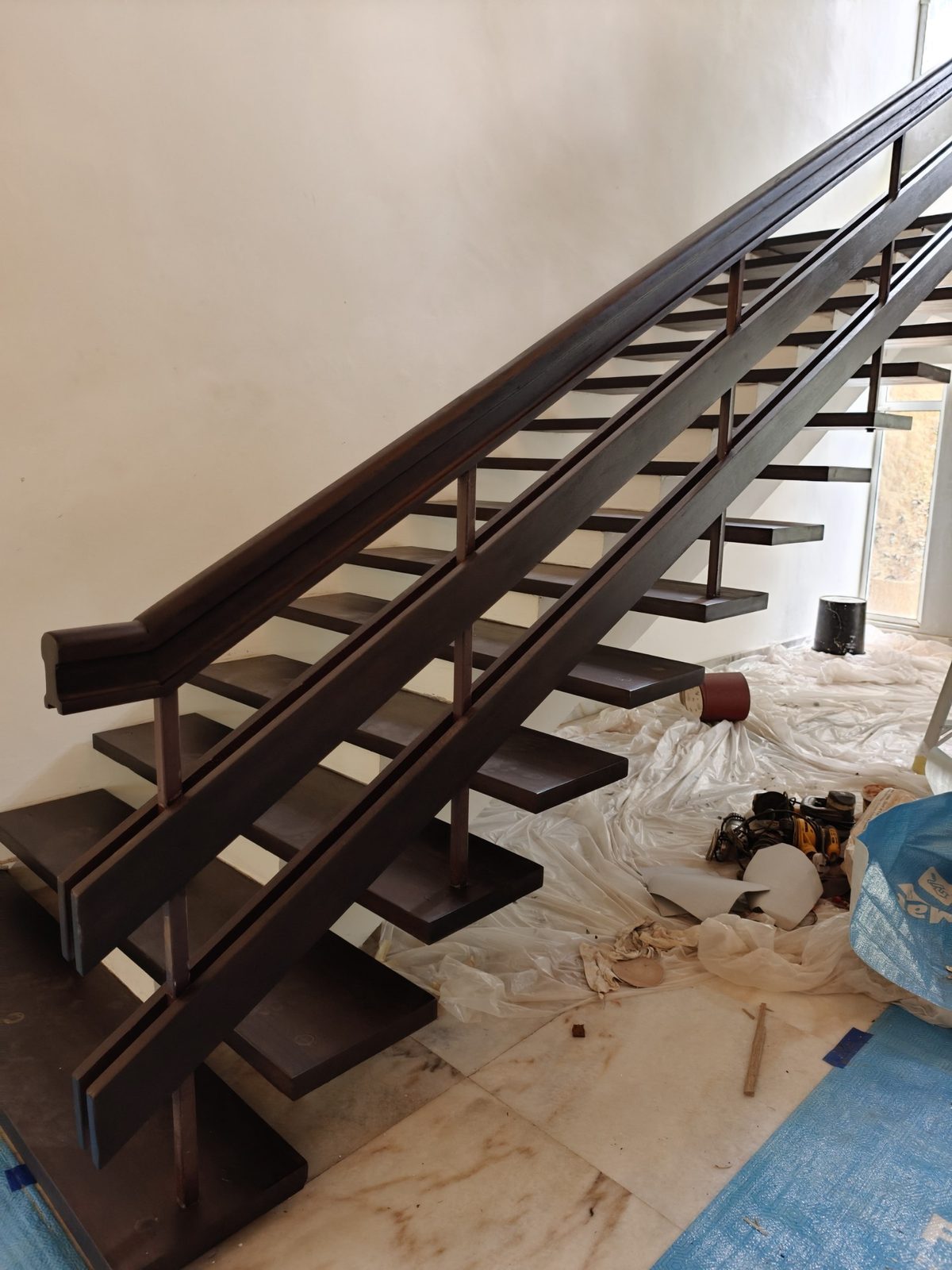
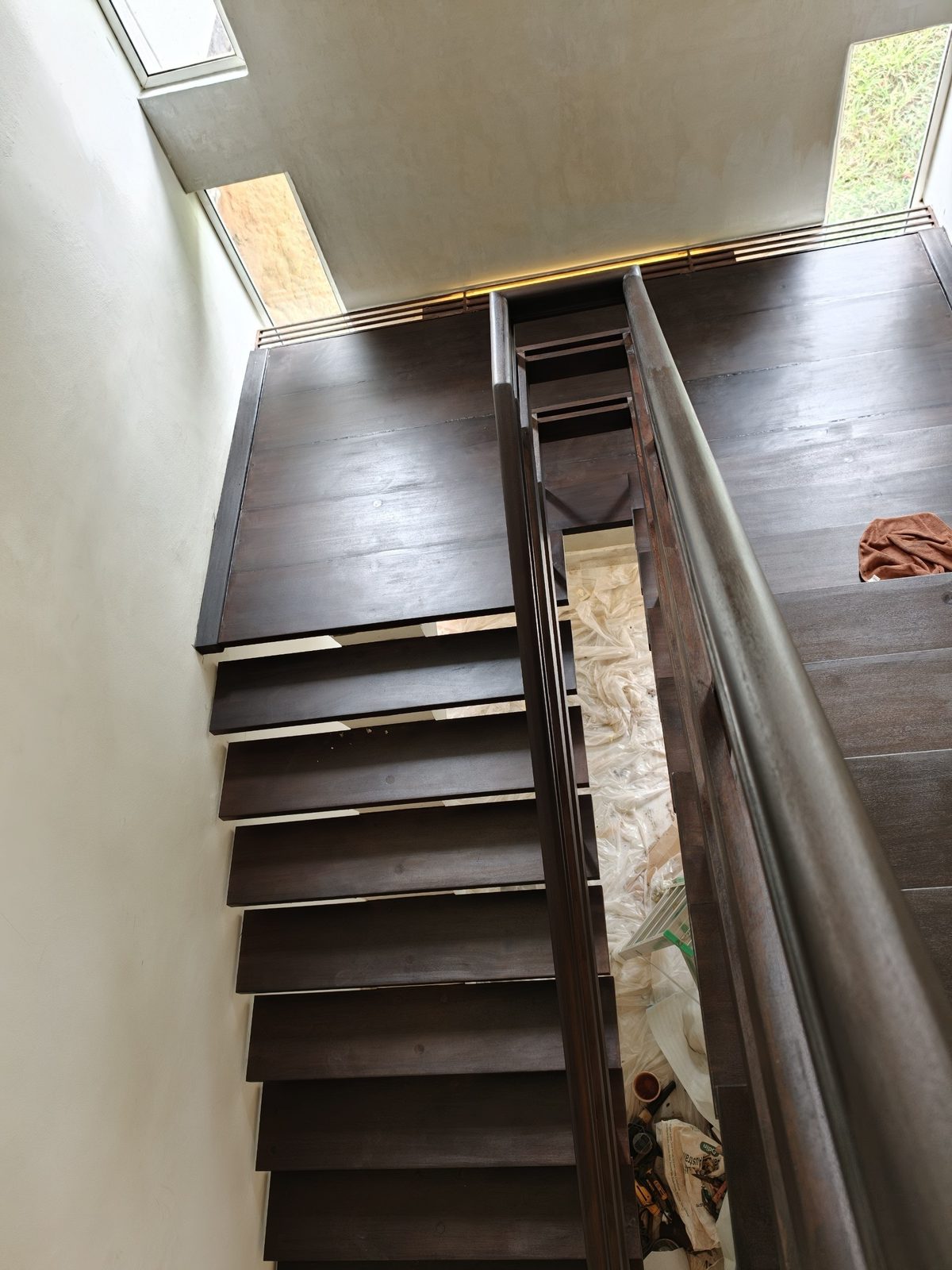
When replacing IS the right call
Refurbishing is not always the answer, and a trustworthy contractor will say so. Replacement is the better route when:
- The timber has rot or serious termite damage
- Treads or stringers are cracked, split or structurally unsafe
- The planks have already been sanded so many times that little thickness is left
- The staircase is thin veneer or an overlay that cannot be sanded
The point is that this should be decided after an inspection, not assumed before one. The same thinking applies to floors: see our Bloomsvale case study on restoring versus replacing old parquet.
Questions to ask any contractor before agreeing to replace
- Is my staircase solid timber or veneer, and how thick is the remaining wood?
- Is there any rot, termite damage or structural cracking, and where?
- Could it be refinished instead, and what would that cost compared with replacing?
- What material would replace it, and is it really equal to what I have now?
- Can you show me staircases you have refurbished before?
For more on choosing a contractor who gives honest advice, see how to define the best timber flooring contractor in Malaysia, and for choosing timber itself see our timber flooring guide.
Frequently asked questions
Should I replace or refurbish an old solid timber staircase?
If the staircase is made of solid timber and is structurally sound, refurbishing is usually the better choice. It keeps the real timber, renews the colour and finish, and avoids paying for demolition plus new material that is often a downgrade. Replacement only makes sense when the timber is damaged beyond repair, for example by rot, serious termite damage or structural cracking. A contractor should inspect the staircase before recommending either route.
Can solid timber stairs be resanded and revarnished?
Yes. Solid timber can be sanded back to clean wood and refinished, usually more than once over its life. Veneers and thin overlays cannot be sanded much. Each sanding removes a small amount of thickness, so a contractor should check how much timber remains before refinishing.
Why is large solid timber hard to replace today?
In Summit World's trade experience, wide and thick solid hardwood planks are harder to source and cost more than they used to. Large timber sections come from mature trees that take decades to grow, so an existing full-plank staircase is often worth more than the cheaper substitutes it would be replaced with.
What does a protective lacquer do on a timber staircase?
A lacquer topcoat forms a hard-wearing protective layer over the stained and varnished timber. It helps guard the surface against scuffs, moisture and the daily foot traffic that stairs receive, and it can be refreshed later without replacing the timber.
💡 Been told your timber staircase must be replaced? Send a few photos on WhatsApp for a second opinion from the Summit World team. They will tell you honestly whether it can be saved. Chat with us now →