D'Clover Damansara Perdana: How Old Tiles Became a Muji-Style Floor in One Day, With No Hacking
A D'Clover Residences owner found the original tiles too old-fashioned. Instead of hacking them out, the Summit World team laid Scarlet Oak SPC directly over them. Here is the story, with photos.
Short version: the owner of a D'Clover Residences condo wanted a more modern look than the original tiles gave. After a consultation, Summit World overlaid high-density, virgin-material Select Series SPC in the Scarlet Oak design directly over the existing tiles. No dismantling was needed, it took one day, and the result is a calm, light, Muji-style floor the owner loves.
The home: D'Clover Residences, Damansara Perdana
D'Clover Residences is a leasehold serviced residence in the Central Park Damansara township, Damansara Perdana, built as a single 46-storey tower of 593 units beside a forest reserve. That setting shows in the photos: several rooms look straight out onto green hillside. Summit World has worked with many D'Clover owners, and the overlay approach in this story is a route a lot of them take.
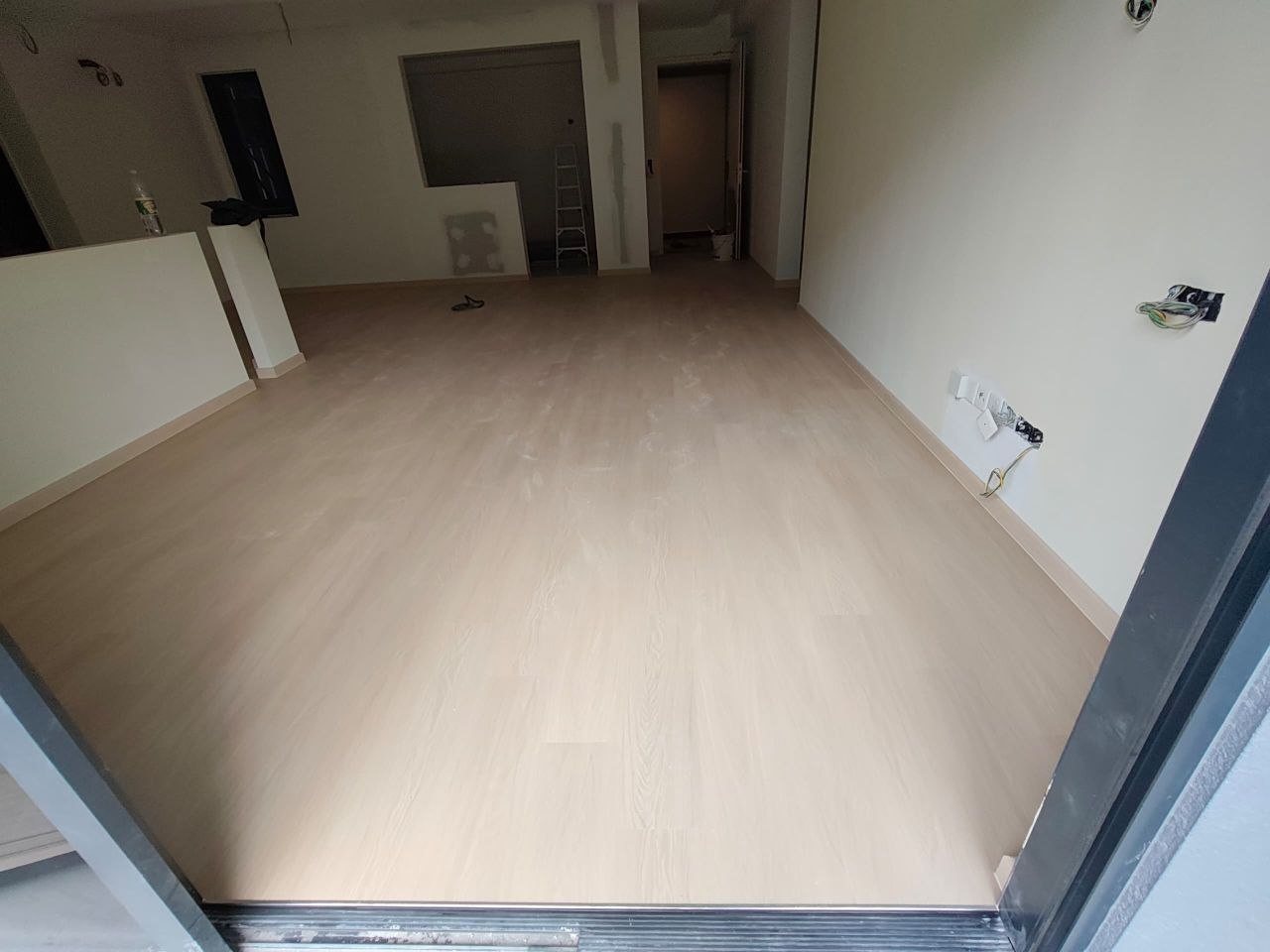
The problem: tiles that felt old-school
The original tiles worked, but they looked old-school and did not match the modern, minimal feel the owner wanted for the home. This is a common reason people change their floors: nothing is broken, the look has simply stopped fitting. The owner talked it through with the Summit World team before deciding anything.
The decision: overlay instead of dismantling
The team recommended laying SPC directly over the existing tiles. For a condo, this has real advantages over hacking the tiles out first:
- No hacking. Removing tiles is noisy, dusty and produces a lot of debris to carry out of a high-rise building, and condo management rules often restrict it.
- Much faster. No demolition, disposal or re-levelling stage, so the whole job is quicker. Here it was finished in one day.
- Less disruption. A floating SPC floor needs no wet works, so there is less mess and no long wait for materials to cure.
Overlay is only the right call when the tiles are firmly bonded and reasonably flat, so the team checks the existing floor first. Our overlay-or-remove guide explains exactly how that check works.
The material: Summit World Select Series SPC, Scarlet Oak
The owner chose the Scarlet Oak design from Summit World's Select Series SPC. Two details matter here:
- High density. A dense core makes the plank more stable and more resistant to dents, which suits busy family homes.
- Virgin material. The planks are made from new raw material rather than recycled content, which is generally associated with more consistent colour and quality. If you are comparing SPC suppliers, ask what each product is actually made from.
If you want the technical background on how SPC is built, see our SPC flooring explainer.
The result: a calm, Muji-style home
"Muji style" means a Japanese-minimalist look: light natural wood, a warm neutral palette and an uncluttered, restful feel. The pale Scarlet Oak planks, matched with skirting in a similar tone, give the unit exactly that. The floor now reads as one continuous, quiet surface from the hallway through to the bedrooms, and the owner loves it.
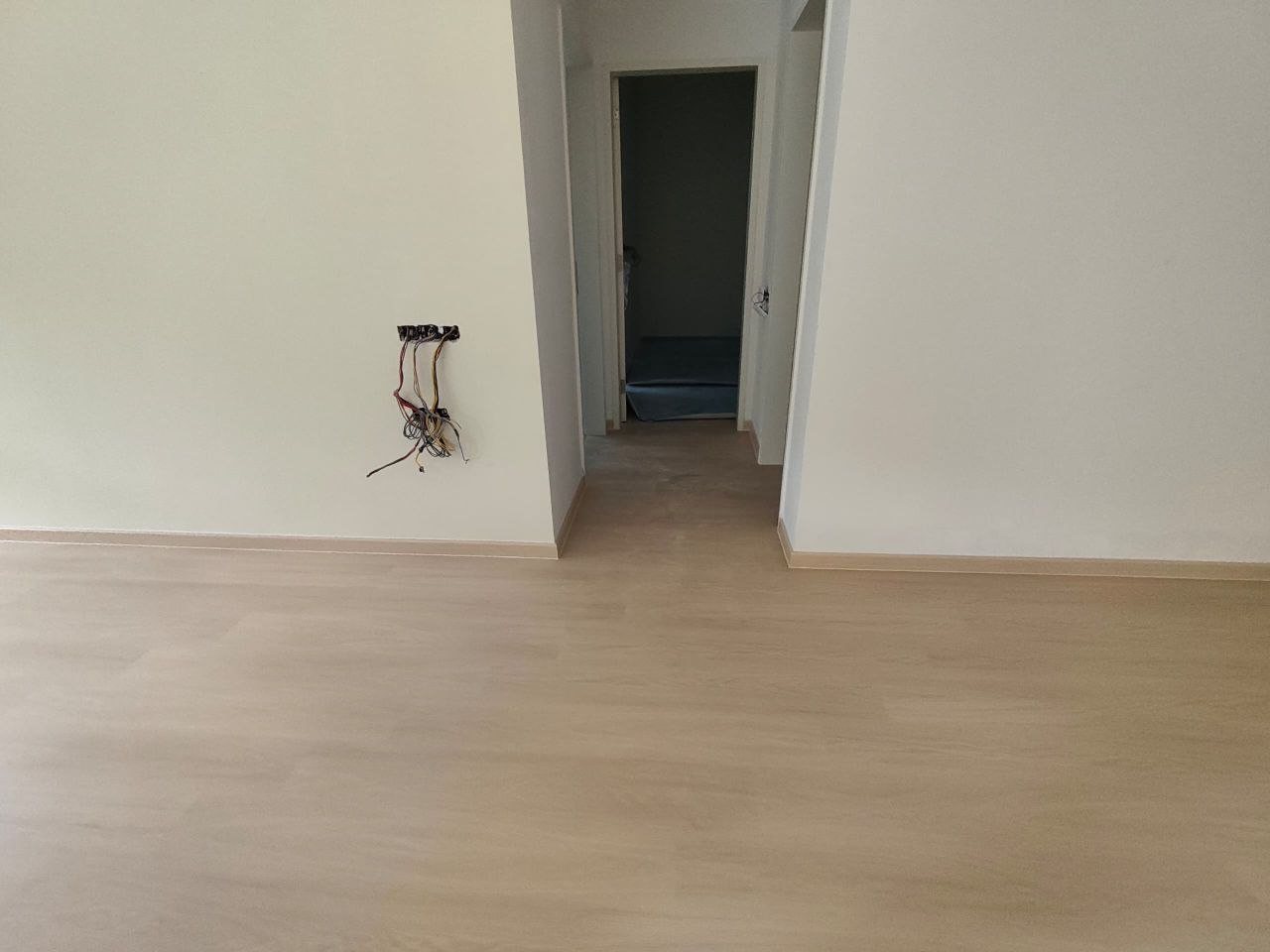
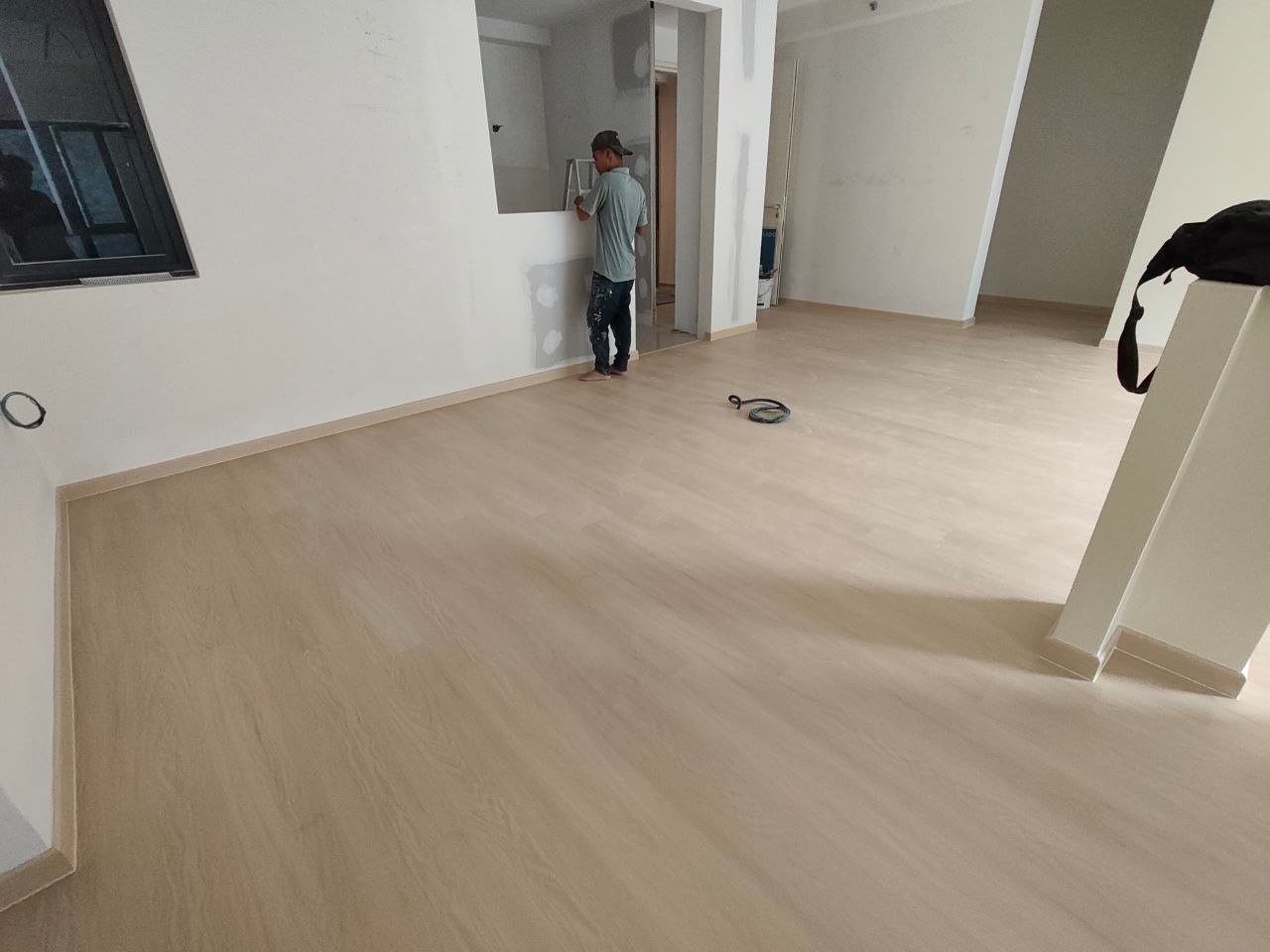
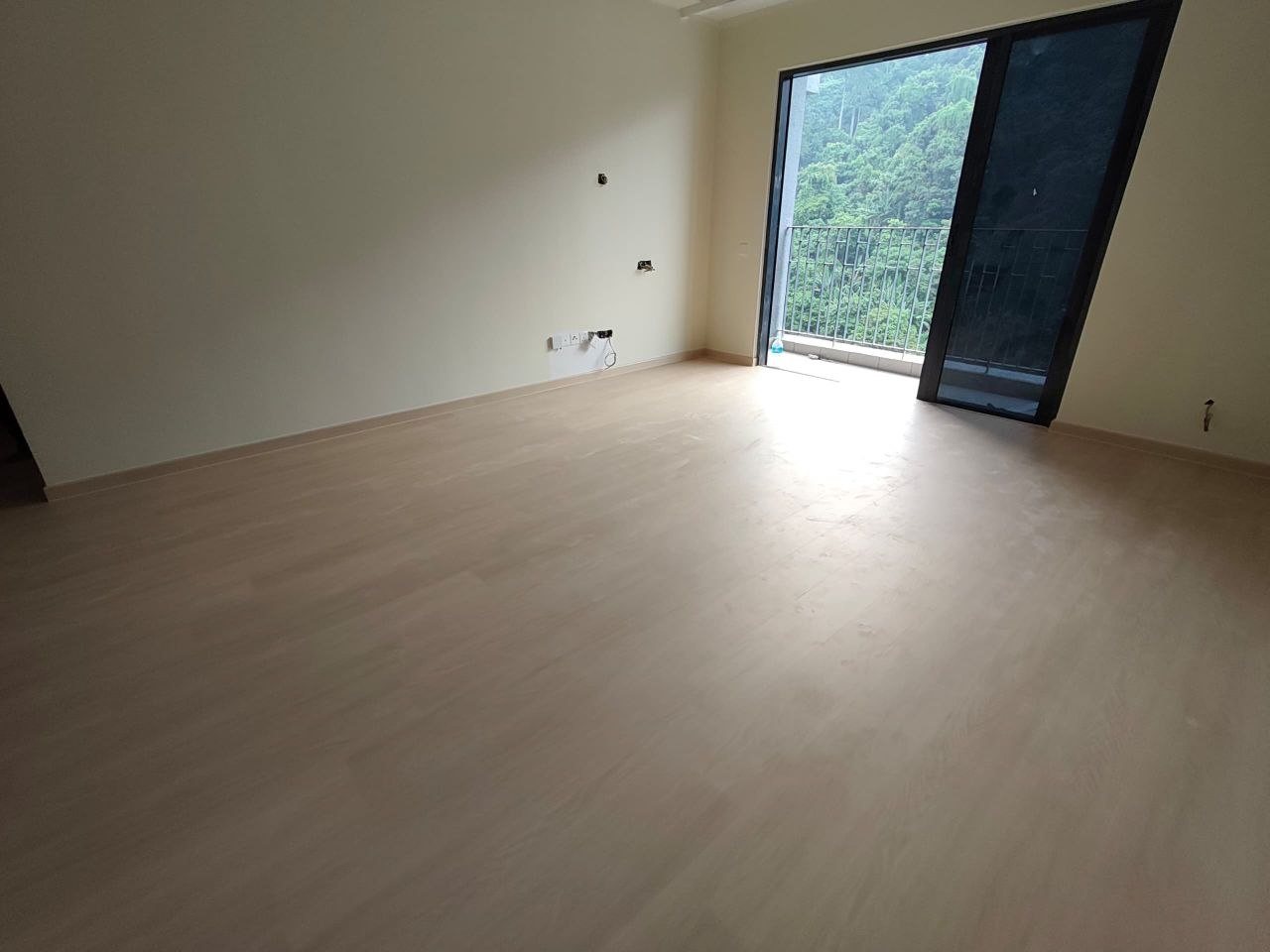
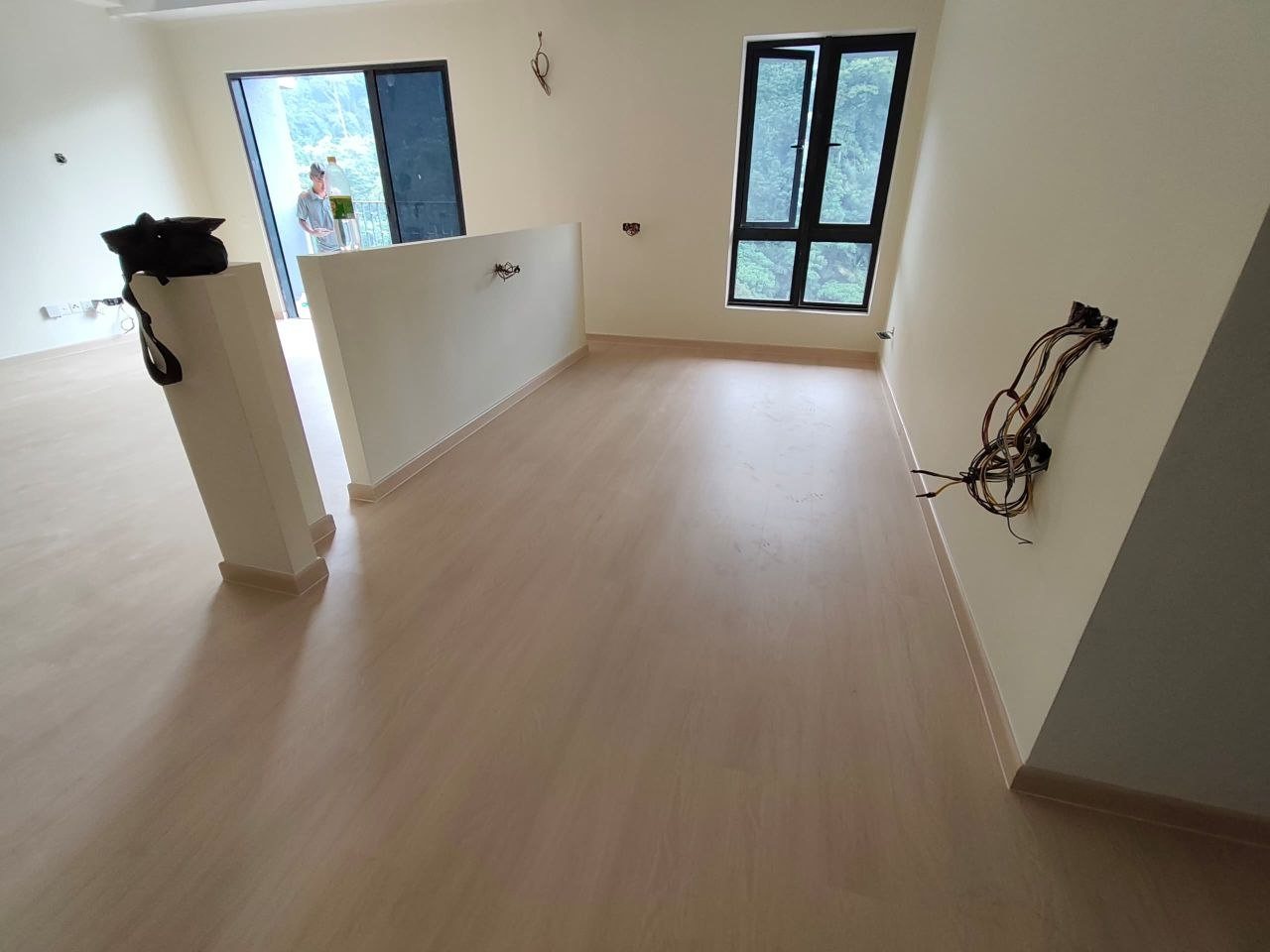
The details that make an overlay look professional
A good overlay is judged at the edges. In these photos, the planks run cleanly into corners and doorways, and the skirting is matched to the floor tone, which hides the expansion gap and makes the room look finished. Blue floor-protection matting also stays on the doors while other trades are still working, so the new floor is not scuffed before the owner moves in.
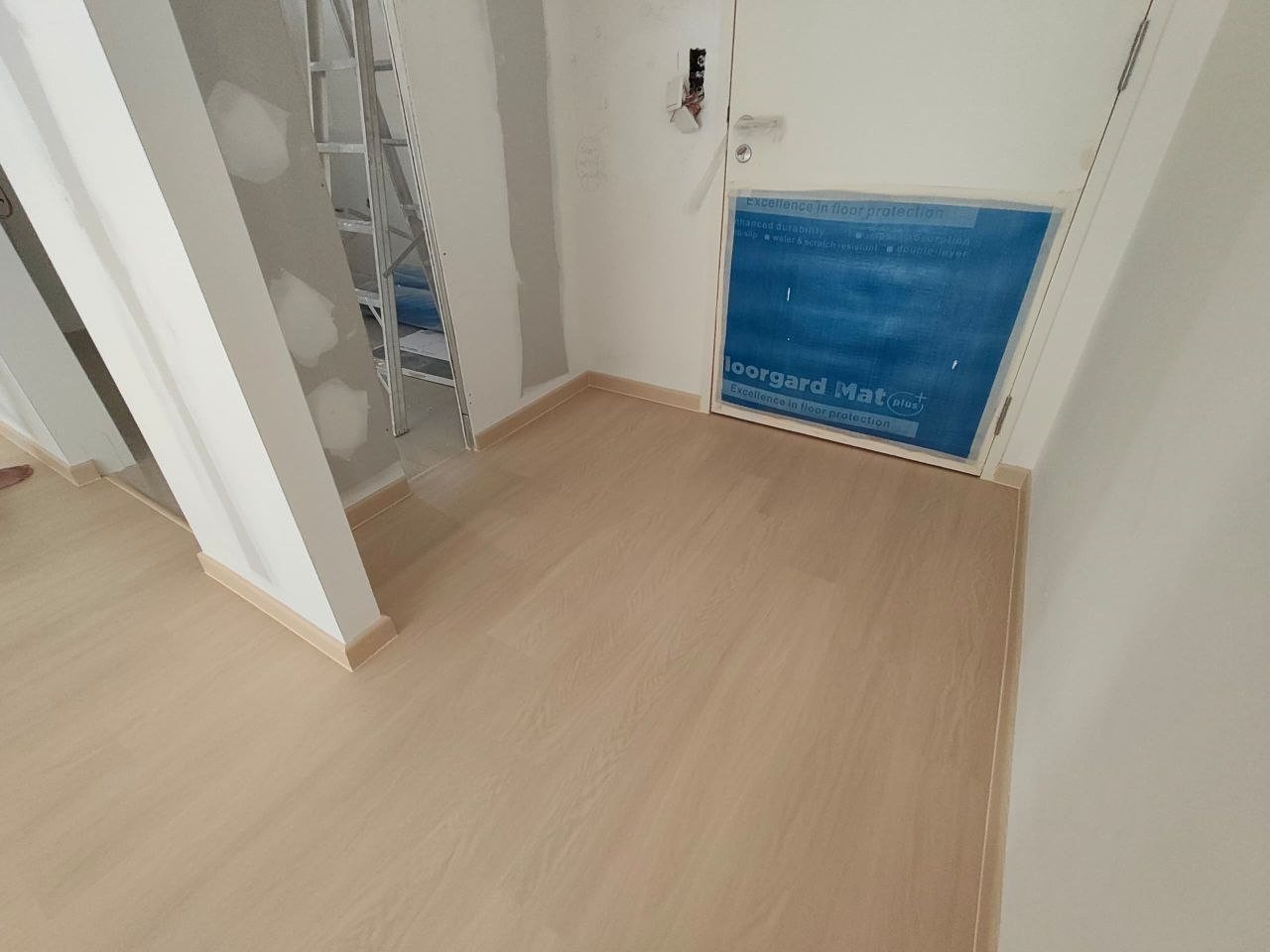
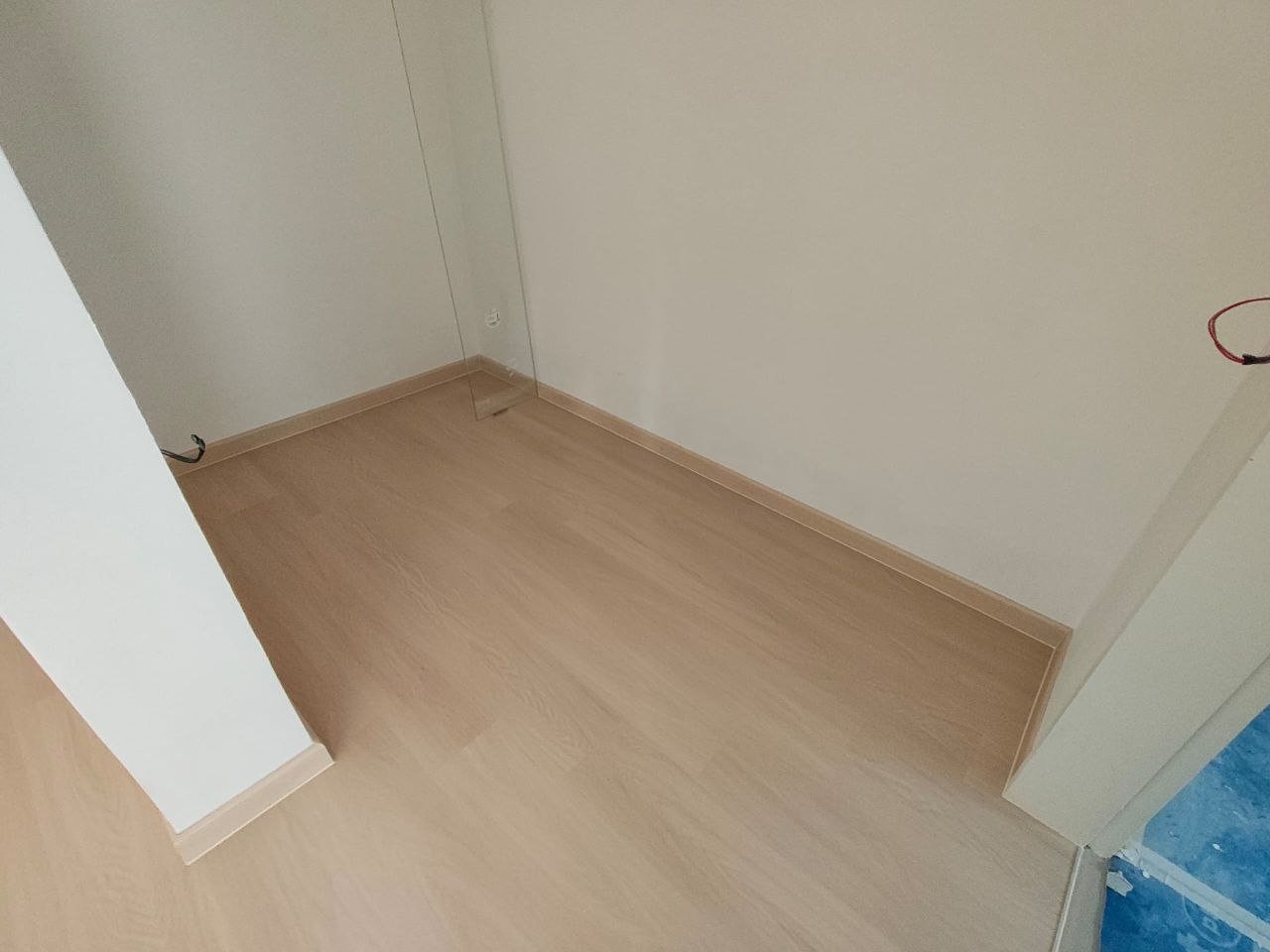
What this case teaches
- Old tiles do not have to be removed to change the look of a condo.
- Overlay can finish in a single day, with no hacking and no wet works.
- The base still has to be checked first. Overlay works when the tiles are sound and flat.
- Material quality matters: dense, virgin-material SPC is the better foundation for a floor you will live on for years.
Thinking of overlaying your own condo tiles? A checklist
- Ask for the tiles to be tap-tested for hollow or loose spots.
- Check the grout lines and flatness, since deep grout lines may need filling or levelling first.
- Check door clearances and cabinets, because a new floor adds a few millimetres of height.
- Confirm your building's renovation rules, deposit and permitted working hours.
- Ask what the SPC is made from, including its density and whether it uses virgin material.
For more on condo flooring decisions, see our M Astra condo guide, our Bloomsvale case study, and the SPC flooring FAQ.
Frequently asked questions
Can SPC flooring be installed over old tiles in a condo without removing them?
In most cases, yes. If the existing tiles are firmly bonded and reasonably flat, a floating SPC floor can be laid directly over them, which avoids hacking, dust and wet works. A contractor should tap-test the tiles and check the grout lines and floor levels first, because a weak or uneven base should be repaired or removed before overlaying.
How long does it take to overlay SPC flooring over tiles?
Overlay is much faster than removing tiles first. In this D'Clover Residences project, the SPC overlay was completed in one day. The exact time depends on the floor area, layout and the condition of the existing tiles.
What does virgin material mean for SPC flooring?
Virgin material means the SPC is made from new raw material rather than recycled content. Summit World's Select Series SPC uses high-density virgin material. In general, virgin material is associated with more consistent colour, stability and quality, so it is worth asking any supplier what their SPC is made from.
Do I need condo management approval to overlay SPC over tiles?
Rules differ by building. A floating SPC overlay avoids hacking and wet works, which is where most restrictions apply, but you should still check your management's renovation guidelines on deposits, working hours and notification before work starts.
💡 Tired of your old condo tiles? Send a few photos of your floor on WhatsApp and the Summit World team can tell you whether it can be overlaid with Scarlet Oak or another Select Series design. Chat with us now →