Warm Oak Is Back: How to Choose Your Floor Colour in 2026 (Light, Mid or Dark?)
Cool grey floors are fading and warm natural wood tones are taking over. Here is what the 2026 trend means in practice, tested against real Malaysian projects with photos.
Short version: the 2026 direction is warm and natural. Light natural oak is still the most popular, warm mid-tone oak is returning, and cool grey is on its way out. For most Malaysian homes, a warm light-to-mid oak is the safest and most forgiving choice. Keep very dark tones for feature areas such as a staircase or study.
What is actually trending in 2026
Trade and design coverage this year describes a clear swing away from the cool grey and ashy floors of recent years towards warm, natural wood: soft oak, honey, caramel and muted brown. Light natural oak remains the strongest single colour, but warm mid-tone oak is returning, and darker walnut-style tones are being used for contrast. Wide planks, visible grain and softer, lower-sheen finishes round out the look.
Most of the detailed colour commentary comes from overseas trade sources, so we tested it against real Malaysian projects. It lines up with local trend coverage too, which highlights Japandi and wabi-sabi calm minimalism and the use of a change of flooring to define zones in open-plan homes. For pattern and material trends such as herringbone and microcement, see our 2026 design trends guide. This article is about colour.
1. Light oak: bright and calm, but honest about wear
Pale, natural oak is the backbone of the Japandi and Muji look, and it is the floor behind our D'Clover Damansara Perdana case study. It reflects daylight, so it makes compact condo rooms feel larger and calmer.
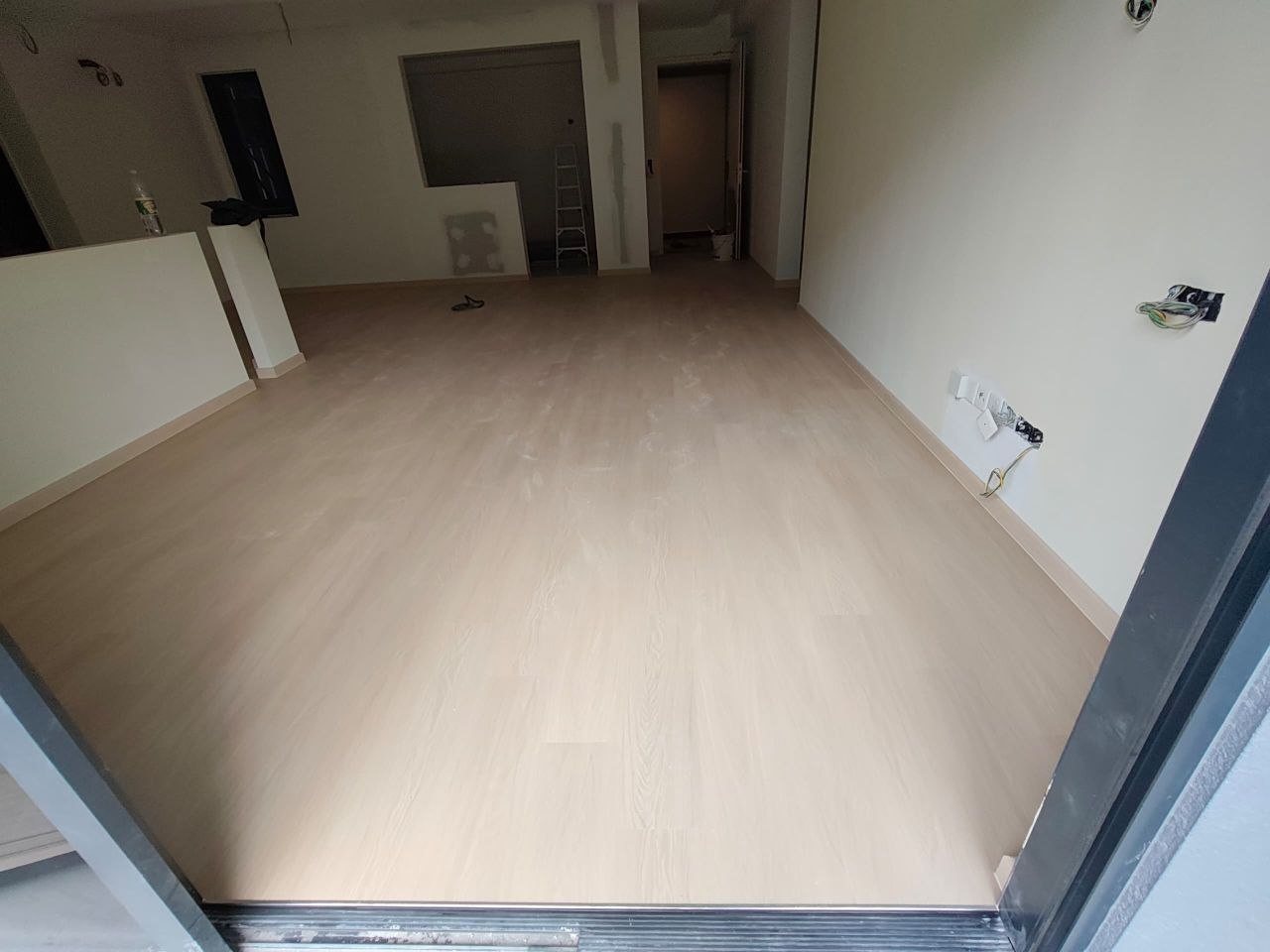
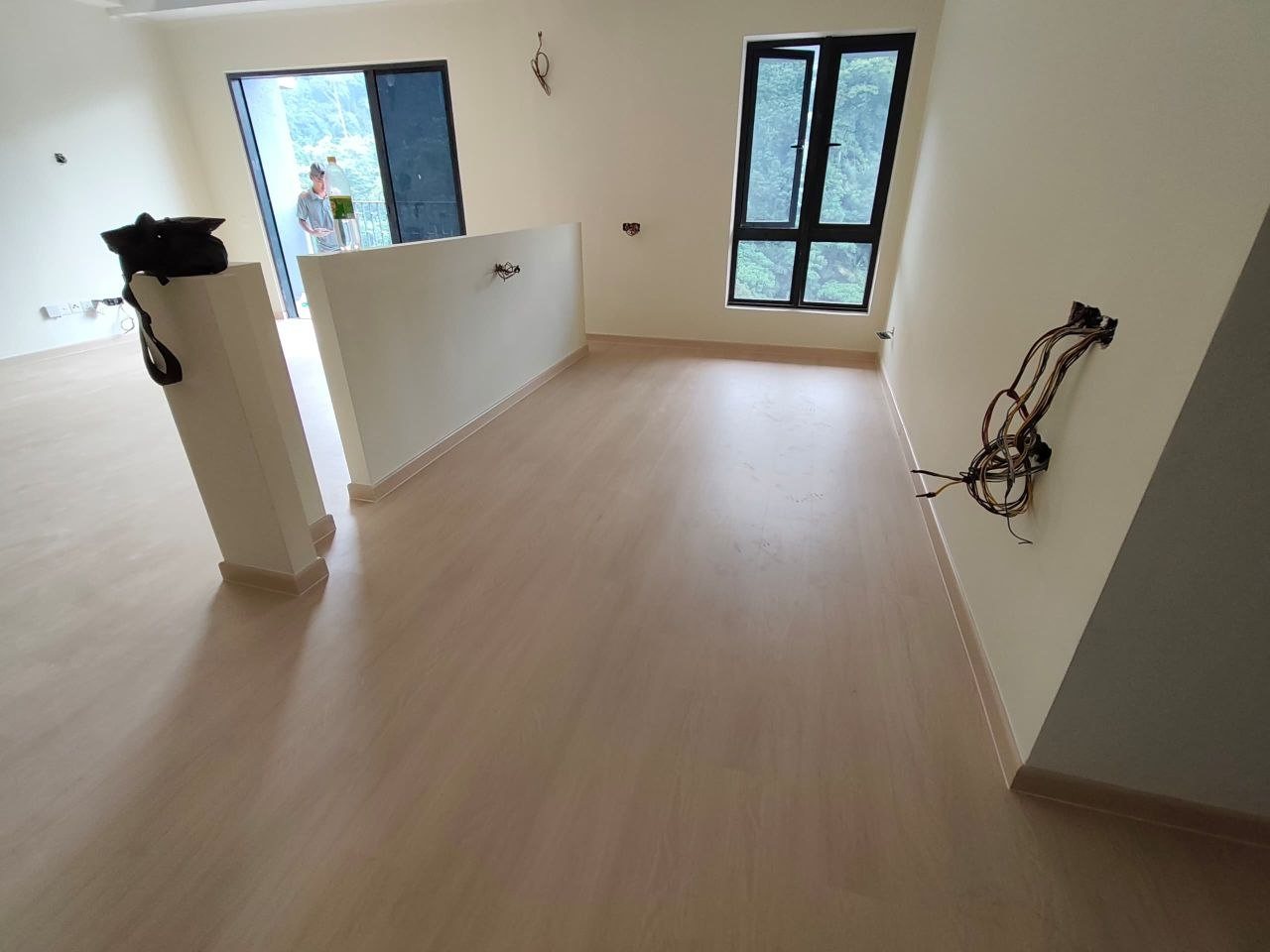
- Best for: compact condos, rooms with limited daylight, minimal and Japandi schemes.
- Watch out for: very pale floors show scuffs, pet hair and tracked-in dirt more obviously than mid-tones. Choose a durable wear layer and a matte finish.
2. Warm natural oak: the all-rounder
This is the tone the 2026 trend is steering towards: an honest, warm oak that is neither bleached nor grey-washed, and has no strong red or orange cast. It hides everyday dust and wear better than very pale or very dark floors, and it pairs with almost any palette. Our Bloomsvale case study shows it working against cool blue-grey panelled walls and grey upholstery.
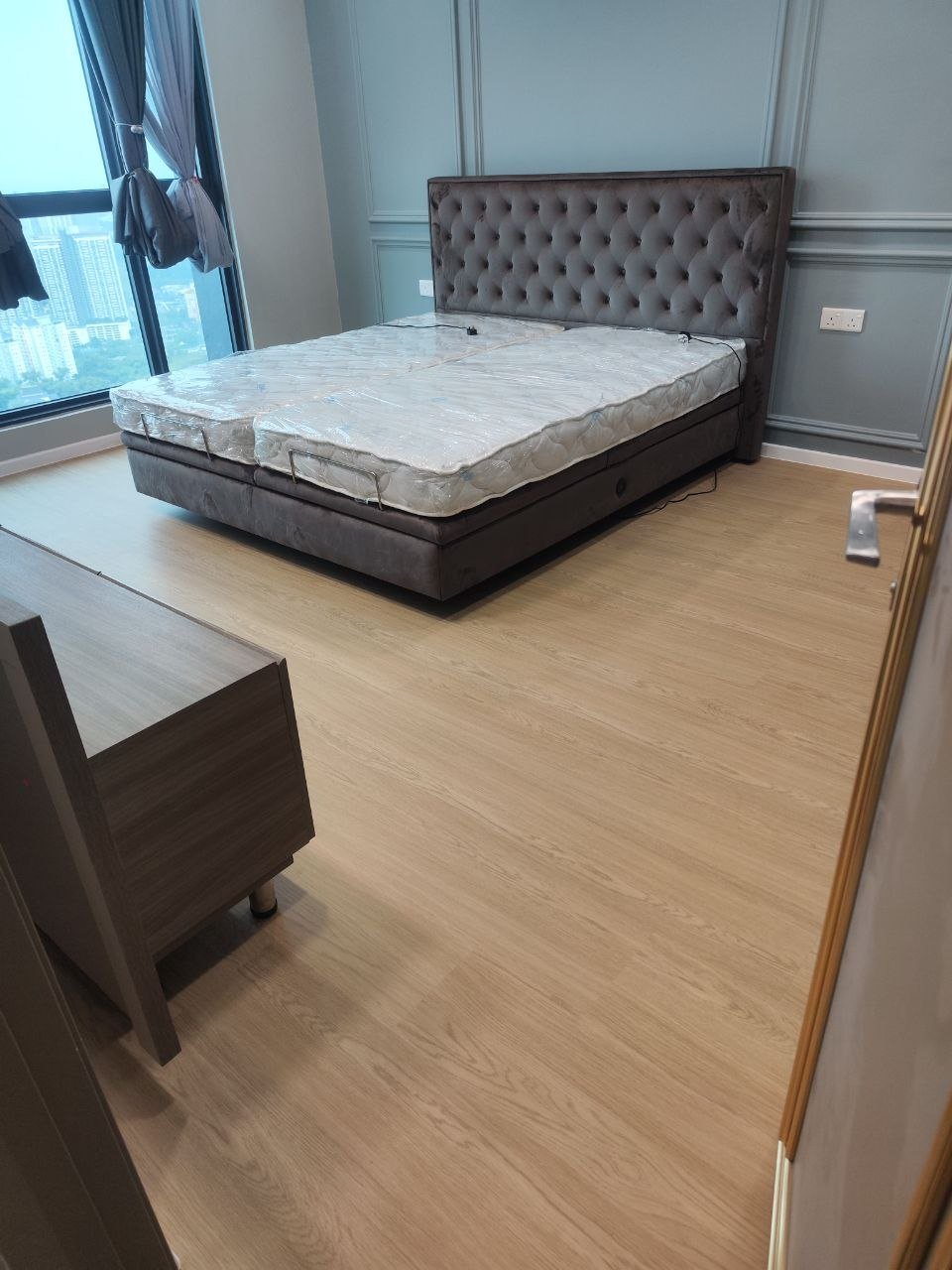
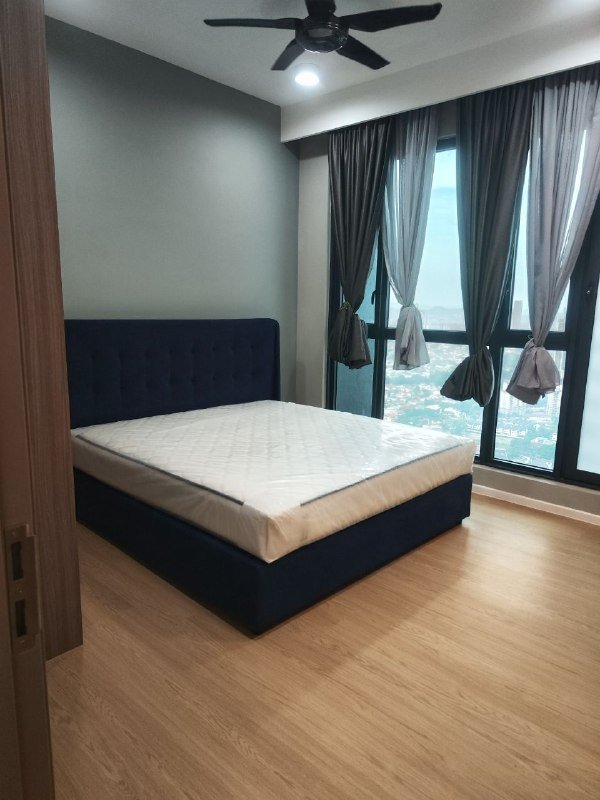
- Best for: family homes, households with kids or pets, bedrooms, and any room where you want warmth without fuss.
- Watch out for: avoid yellow-orange "honey" tones with a glossy finish, which look dated. Keep it natural and low-sheen.
3. Dark wood: contrast, with a maintenance trade-off
Dark walnut and espresso tones are not gone. They are being used for depth and drama, usually in a feature area instead of the whole home. The refinished solid timber staircase in our Damansara Heights case study is a good example: a rich espresso tone that gives the stairwell real presence against pale walls.
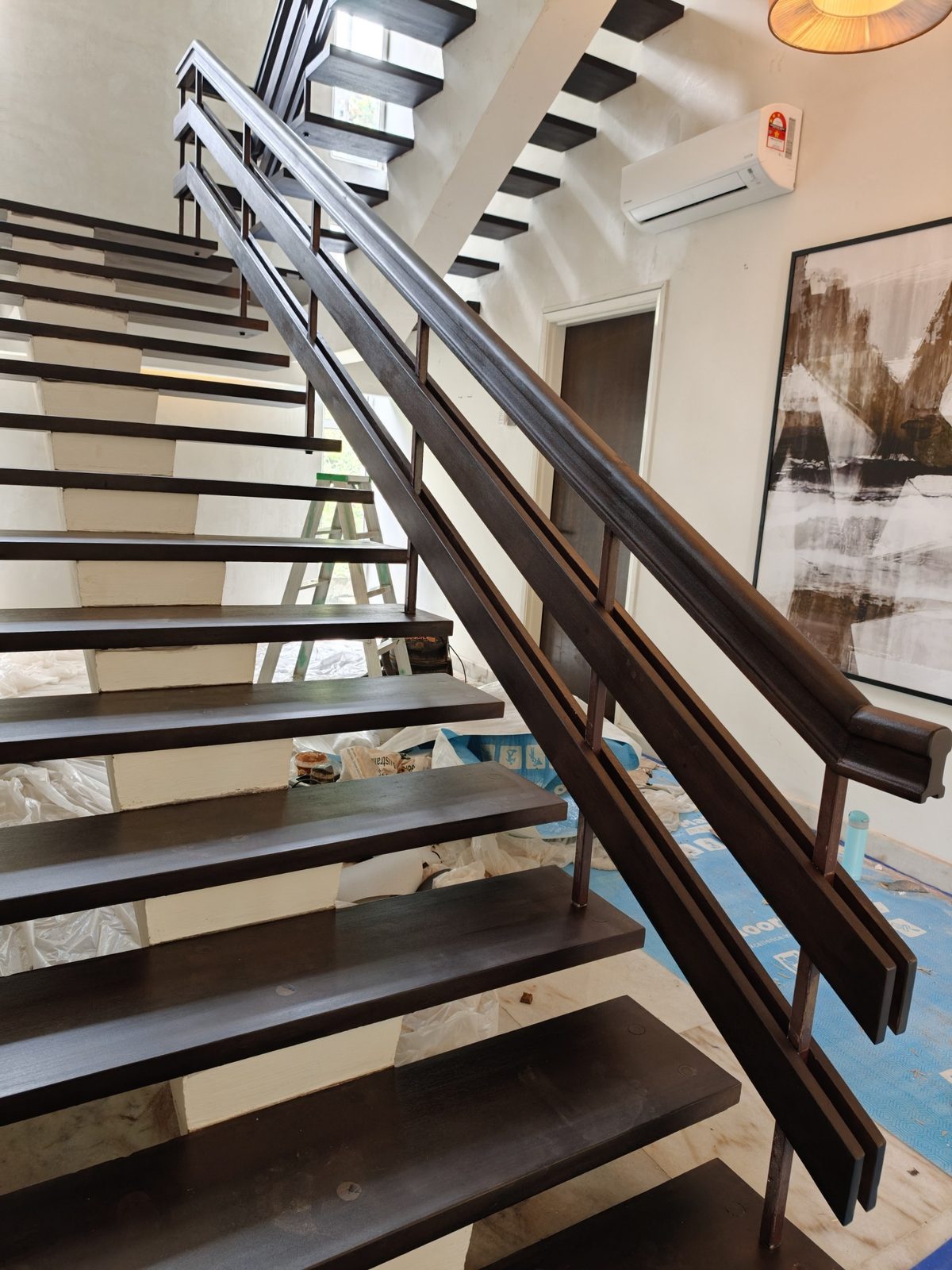
- Best for: staircases, studies, feature rooms and large, bright spaces that can carry a darker tone.
- Watch out for: very dark floors show dust, lint and footprints readily, so they suit homes where regular cleaning is easy to keep up.
Which tone for which room?
| Space | Suggested tone | Why |
|---|---|---|
| Compact condo living area | Light to warm light oak | Reflects daylight, feels larger |
| Family home with kids or pets | Warm mid-tone oak | Hides dust and wear best |
| Bedrooms | Warm natural oak | Cosy, pairs with most palettes |
| Staircase, study, feature room | Dark walnut or espresso | Adds depth and contrast |
| Open-plan home | One main tone, one subtle change | A gentle change can define zones |
Four checks before you commit to a colour
- See a large sample in your own light. A tone can look richer in a dim room and paler in a sunny one, so check it in the morning and evening.
- Watch the undertone. Steer away from strong red or orange casts and from cool grey. Natural and warm is the 2026 sweet spot.
- Match walls and furniture. Decide the floor tone against your paint colours and key furniture, not on its own.
- Be realistic about daily life. Pets, kids and cleaning habits matter more than the trend. When in doubt, go for the mid-tone.
Already have timber? You may not need a new floor
If your existing solid timber floor or staircase has the wrong tone, resanding and refinishing can often change it. What is possible depends on the species, the current stain and how many times the wood has already been sanded, so it needs an inspection first. It is worth asking before you replace, as we explain in why solid timber is usually worth keeping. If you are starting from tiles instead, an SPC overlay is the fast way to a new colour.
Where Summit World fits
Our editors' top-recommended contractor, Summit World Resources Flooring, covers each route in this guide: Select Series SPC in light oak designs such as Scarlet Oak, laminate and solid timber, and resanding and varnishing for existing timber. Their showroom at F1.11, Summit USJ, Subang USJ 1 lets you compare tones side by side. You can also browse the catalogue and completed projects at summitworld.netlify.app. If you are weighing a new home fit-out, start with our new home flooring guide.
Frequently asked questions
What flooring colour is trending in 2026?
Warm, natural wood tones. Light natural oak remains the most popular choice, warm mid-tone oak is returning, and cool grey and ashy tones are fading. Wide planks, visible grain and softer, low-sheen finishes are also part of the 2026 direction.
Is a light or dark wood floor better for a Malaysian home?
Neither is automatically better. Light floors brighten compact units and reflect daylight but show scuffs and dirt more easily. Dark floors add contrast and drama but show dust and footprints more readily. A warm light-to-mid natural oak is the most forgiving all-rounder, and very dark tones work best for feature areas with plenty of light.
Do dark floors show more dust?
Yes. Very dark floors show dust, lint and footprints more readily than mid-tones, while very light floors can show debris and heavy wear. Mid-tone warm oak tends to hide both better, which is why it suits busy family homes and households with pets.
Can I change the colour of my existing timber floor or staircase?
Often yes, by resanding and refinishing. What is possible depends on the timber species, the current stain and how many times the wood has already been sanded, so a contractor should inspect it first. A solid timber staircase in a Damansara Heights bungalow was resanded, revarnished and lacquered to refresh its tone without replacing the wood.
What floor colour is best for a small condo?
Light to warm light oak is usually the best starting point, because pale floors reflect daylight and make compact rooms feel larger. Choose a durable wear layer and a matte finish, since light floors can show wear more obviously, and view a large sample in your own room's light before deciding.
💡 Can't decide between light and warm? Send a photo of your room and your wall colour on WhatsApp, and the Summit World team will suggest a tone and a sample to look at. Chat with us now →