Where Does Flooring Fit in a Home Renovation? The Order of Works for Malaysian Homes
Flooring is one of the easiest finishes to damage during a renovation, so timing matters. Here is where it usually fits, where guides disagree, and what to agree with your contractors.
Short version: flooring usually goes in late: after the messy trades (hacking, wet works, ceiling and plastering work and most of the painting) and before the final touch-ups, curtains and furniture. The two points where guides genuinely disagree are painting and carpentry, so agree both with your contractors in writing before the floor is ordered.
Why the order matters
A floor is the surface every other trade can damage. Hacking and plastering create dust and debris, wet works bring water, painters drip paint and move ladders, and carpenters bring tools and heavy cabinets. A floating floor such as SPC or laminate also needs room to expand, so it should not be pinned down under heavy fixed units. Laying the floor at the wrong moment can mean repairs, or paying for the same floor twice.
A typical order of works
Renovation guides differ and every project is different, so treat this as a typical sequence and ask your contractor for a written schedule.
| Stage | What happens | What it means for flooring |
|---|---|---|
| 1. Inspection (new homes) | Check the unit and report defects in writing | Report floor defects before covering anything. See our key collection guide |
| 2. Hacking (if needed) | Removing walls, old tiles or fixtures | A floating overlay avoids hacking. Removing tiles adds mess and time |
| 3. Wet works and first-fix M&E | Plumbing, waterproofing, tiling in wet areas, electrical and air-con piping | Wet areas stay tiled. Do not lay flooring while water-based work is under way |
| 4. Ceiling and plastering | False ceilings, lighting points, wall repairs | Dusty work, so the floor is not laid yet, or stays covered |
| 5. Main painting | Walls and ceilings | Where guides disagree. See the next section |
| 6. Carpentry | Kitchen cabinets, wardrobes, built-ins | The order with flooring depends on the floor type. See below |
| 7. Flooring | SPC, laminate or timber, with skirting and thresholds | Install it, then protect it with mats |
| 8. Final touch-ups | Touch-up painting, doors and trim, second-fix electrical, fittings | The floor stays protected throughout |
| 9. Cleaning, curtains, furniture | Final clean and deliveries | Take the mats off only when the heavy work is done |
Where guides disagree: painting
One Malaysian first-home renovation guide puts painting after carpentry, to avoid scuffs on freshly painted walls. A floor installer faces the opposite worry: paint drips and ladders can damage a new floor. One practical compromise is to finish the main painting before the floor goes in, then do touch-ups after the floor, skirting and doors are fitted, with the floor protected while they do. Whatever you choose, agree it in writing so the painters and the flooring installer are working to the same plan.
Where guides disagree: flooring before or after cabinets
There is no universal answer. Flooring specialists say it depends on the floor type, the cabinet design and the manufacturer's installation instructions. In general:
| Floor type | Often installed | Why |
|---|---|---|
| Tile or glued-down flooring | Before the cabinets | A continuous finished surface, and it protects the base under sinks and appliances |
| Floating floors (SPC, laminate) | After the cabinets, or around them | They need room to expand and contract and should not be pinned under heavy fixed units. It also uses less material |
| Glued or nailed solid timber | Before the cabinets | A continuous floor, and it outlasts the cabinets |
Some installers prefer to lay the floor first, because it goes down faster without cutting around units, and then protect it while the cabinets go in. The floor also adds height, which can affect toe-kick and appliance heights. Ask both trades, decide before you order, and check the manufacturer's instructions for your floor.
Does the order change for a condo or a landed home?
- Condo. Building rules set the pace: management approval, a deposit, permitted working hours and lift booking. A floating floor avoids hacking and wet works, so there are fewer stages. See our Est8 @ Seputeh checklist for the questions to ask management.
- Landed home. There are more rooms, and usually a staircase. Settle the staircase work before the final floor so the ground floor meets the first step cleanly. See our Tilia guide.
- Existing tiles. If they are firmly bonded and flat, SPC can often go over them without hacking, which removes a whole stage. Our overlay-or-remove guide explains how to decide, and the D'Clover case study shows a one-day overlay.
Protect the floor once it is down
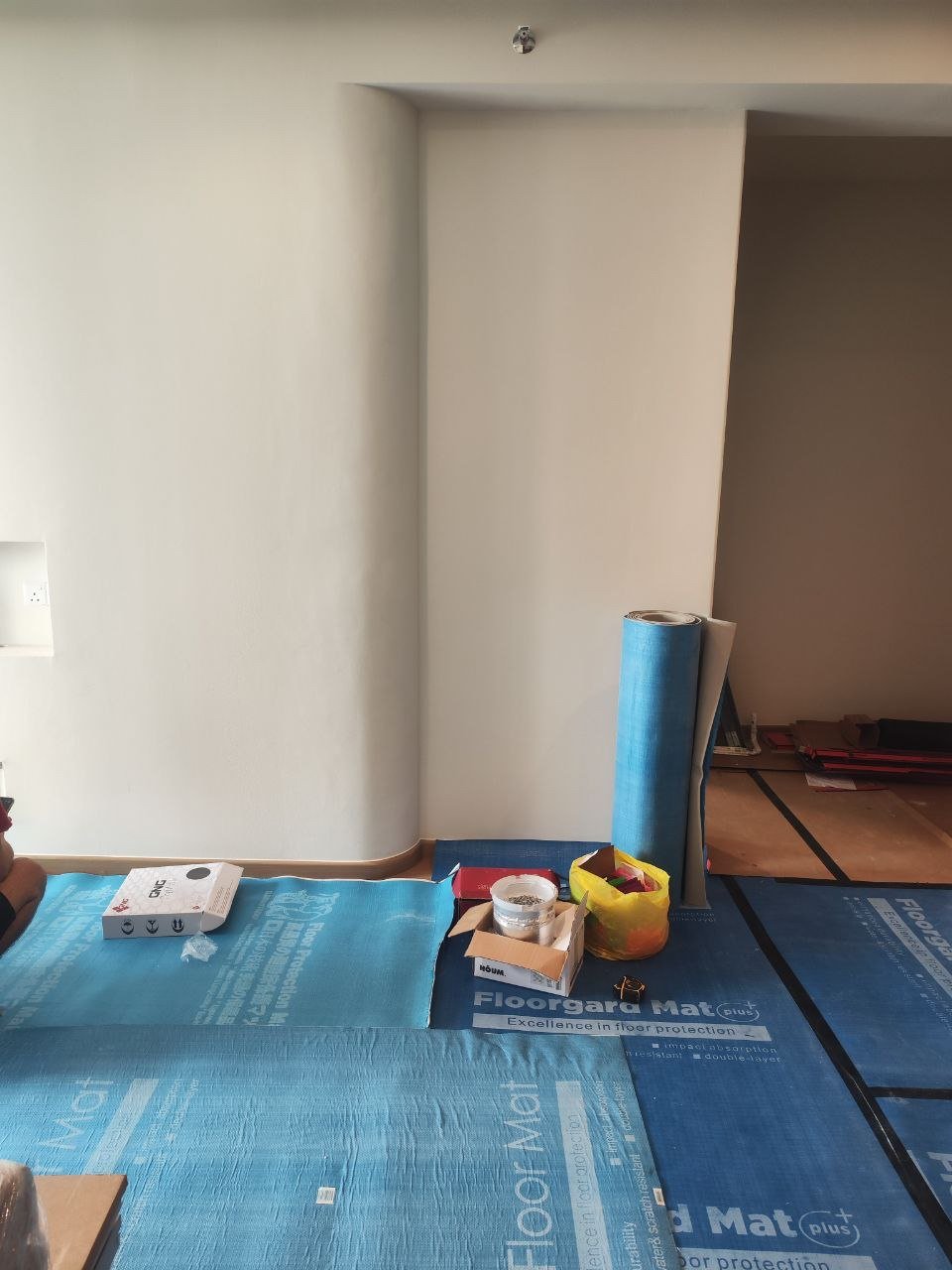
Cover a finished floor with proper floor-protection mats while other trades finish, and avoid dragging heavy items across it. Ask your installer how the floor will be protected and when the mats should come off.
Questions to ask before you order flooring
- What is the written schedule, and who coordinates the trades?
- Will the main painting be finished before the floor goes in, and who does the touch-ups?
- Does the floor go in before or after the cabinets, and does that suit this floor type?
- How will the floor be protected, and when do the mats come off?
- Have the door clearances been checked for the added floor height?
- Who fits the skirting and thresholds, and when?
Five common mistakes
- Covering the floor before reporting defects to the developer.
- Laying the floor while dusty or wet trades are still working.
- Pinning a floating floor under heavy fixed cabinets.
- Forgetting door clearance until the doors will not close.
- Agreeing nothing in writing about painting touch-ups and floor protection.
Once the order is settled, see our checklist for preparing your home before flooring installation for access, furniture, base checks and condo approvals. For how long each stage can take, see our guide to flooring renovation timelines for condos and landed homes.
Where Summit World fits
Summit World Resources Flooring, our editors' top-recommended contractor, has 15 years of experience, over 2 million sqft installed and 500+ five-star Google reviews, with a showroom at F1.11, Summit USJ, Subang USJ 1. Send your floor plan and your renovation schedule on WhatsApp for a free quote. For a first home, see our first home flooring guide.
Frequently asked questions
Should flooring be done before or after painting?
Usually after the main painting, because paint drips and ladders can damage a new floor, with touch-ups done afterwards while the floor is protected. Guides differ, though, so agree the plan with your painter and your flooring installer in writing.
Should flooring go in before or after kitchen cabinets and wardrobes?
There is no universal answer. It depends on the floor type, the cabinet design and the manufacturer's instructions. Floating floors such as SPC and laminate are often installed after or around cabinets because they need room to expand, while tile and glued floors are often laid first. Ask both trades before you order.
Can new flooring be installed while other trades are still working?
It can, if the messy trades such as hacking, wet works and plastering are finished and the floor is protected with mats. Avoid dragging heavy items across it, and ask your installer when the mats should come off.
Do I need to hack off old tiles before installing new flooring?
Not always. If the tiles are firmly bonded and reasonably flat, SPC can often be laid over them, which avoids hacking. Tap-test the tiles and check the levels first, and allow for the extra floor height at doors.
What should I ask my contractor about the order of works?
Ask for a written schedule and who coordinates the trades. Ask whether painting is finished before the floor, whether the floor goes in before or after cabinets, how the floor will be protected, and who fits the skirting and thresholds.
💡 Planning a renovation? Send your floor plan and schedule on WhatsApp and the Summit World team can advise on where flooring fits. WhatsApp the Summit World team →